The Rise of AI Data Centers: Understanding the Basics
In the fast-evolving landscape of artificial intelligence, AI data center have emerged as critical infrastructures that support a wide array of AI applications. These facilities are not just traditional data centers; they are purpose-built to accommodate the immense computational demands of AI workloads. As industries increasingly rely on machine learning and deep learning, understanding the fundamentals of AI data centers becomes essential for businesses and tech enthusiasts alike.
What is an AI Data Center?
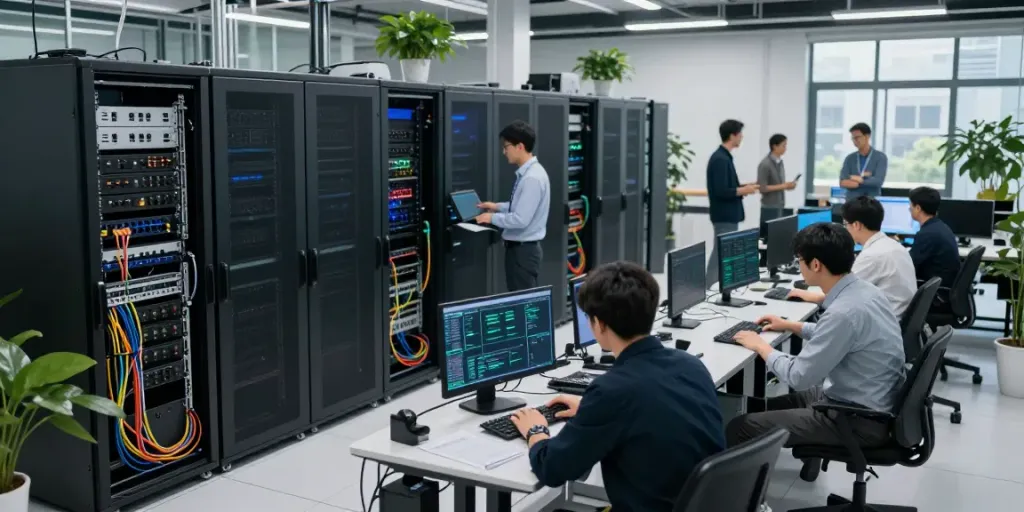
AI data centers are specialized facilities designed to handle the unique requirements of artificial intelligence operations. They house powerful hardware, primarily graphics processing units (GPUs), that execute complex algorithms and process vast amounts of data in real-time. Unlike conventional data centers, which often focus on general computing tasks, AI data centers optimize for high-density computing, featuring advanced cooling systems and power management to sustain continuous operations.
The Role of GPUs in AI Data Processing
Graphics Processing Units (GPUs) are at the heart of AI data centers. These components are specifically engineered to perform parallel operations, making them ideal for tasks such as training machine learning models, processing deep neural networks, and executing inferencing tasks. Unlike central processing units (CPUs), which handle a few threads effectively, GPUs can manage thousands of threads simultaneously, significantly speeding up computation times. This capability enables AI data centers to process large datasets efficiently, paving the way for rapid advancements in AI technology.
Key Differences Between Traditional and AI Data Centers
- Hardware Configuration: AI data centers prioritize GPUs over CPUs, while traditional data centers may use a more balanced mix suited for various computing tasks.
- Power Consumption: The demand for electricity is considerably higher in AI data centers due to the extensive use of GPUs.
- Cooling Requirements: AI workloads generate significant heat, necessitating advanced cooling solutions to maintain optimal operating temperatures.
- Architecture: AI data centers are often built with specialized layouts that enhance data flow and processing efficiency, as opposed to the more generalized layouts of traditional data centers.
How AI Data Centers Power the AI Token Economy
As the AI landscape evolves, the interconnection between AI data centers and the burgeoning AI Token Economy has become increasingly significant. AI data centers not only provide the computational power necessary for AI services but also integrate with a token-based economy that incentivizes resource sharing and engagement.
Connecting Electricity to Data Processing Needs
Electricity is the lifeblood of any AI data center. The computing power required for AI tasks is immense, and as AI applications grow, so too does the demand for electricity. Efficient power distribution and management are crucial to ensure that AI workloads can operate smoothly without interruption. Innovative companies are implementing smart grids and AI-driven energy management systems to optimize power usage and lower costs.
The Contribution of Power Plans to AI Infrastructure
Power plans are integral to the functionality of AI data centers, offering a structured approach to resource allocation. These plans ensure that the necessary power is available to support AI workloads at all times. Participants in the AI token economy can select from various power plans that align with their electricity needs and financial goals, thus fostering a collaborative ecosystem that enhances infrastructure sustainability.
Measuring Performance: Tokens and Rewards
The AI Token Economy relies on a transparent measurement of performance through tokens. Each task completed by AI models generates tokens that reflect their usage. This system not only helps in billing but also provides valuable insights into the efficiency of various AI applications. By analyzing token generation related to computing power, participants can optimize their contributions to the AI infrastructure and refine their operational strategies.
Challenges in Building and Maintaining AI Data Centers
Despite the promising prospects of AI data centers, several challenges must be addressed to ensure their viability and efficiency in the long run.
Infrastructure Costs and Investment Risks
Building an AI data center requires significant financial investment in hardware, software, and supporting infrastructure. Companies must navigate the complexities of budgeting for advanced technology while also preparing for potential fluctuations in energy costs and demand. The inherent risks involved in such investments can deter smaller players from entering the AI data center arena.
Energy Efficiency and Sustainability Considerations
As the demand for AI processing power increases, so too does the focus on sustainability and energy efficiency. Many AI data center operators are exploring renewable energy sources and innovative cooling technologies to minimize their environmental impact. However, achieving a balance between energy consumption and operational efficiency remains a key challenge.
Common Misconceptions about AI Data Centers
- AI Data Centers Are Just Like Traditional Data Centers: This is false; AI data centers require specialized hardware and management approaches.
- AI Models Can Run Without Significant Power: In reality, running complex models demands substantial energy resources to function effectively.
- All AI Tasks Are the Same: Different AI tasks have varying computational demands, and a one-size-fits-all approach does not apply.
Strategies for Optimizing AI Data Center Operations
To navigate the complexities of AI data center operations successfully, companies should consider adopting several best practices aimed at optimizing performance and reducing costs.
Workload-Based Power Allocation Techniques
Implementing workload-based power allocation allows AI data centers to match power distribution with actual workload requirements. This approach minimizes waste and ensures that energy is used efficiently during peak and off-peak times.
Maximizing GPU Utilization for Efficiency
Efficiently utilizing GPUs is paramount to maintaining optimal performance in AI data centers. Techniques such as batch processing, dynamic scaling, and resource pooling can significantly enhance GPU utilization rates, leading to increased output and reduced operational costs.
Real-World Case Studies: Successful AI Data Centers
Several companies have successfully implemented innovative strategies in their AI data centers. For instance, companies like NVIDIA and Google have integrated advanced cooling technologies and invested in AI-driven optimization tools to enhance their data center efficiency. These case studies provide valuable insights into best practices that can be adapted to various business contexts.
The Future of AI Data Centers: Trends and Innovations
The future of AI data centers is shaped by several emerging trends and innovations that promise to redefine the landscape of AI infrastructure.
Emerging Technologies Shaping AI Data Centers
Technologies such as edge computing, quantum computing, and AI-powered resource management tools are set to revolutionize AI data centers. These advancements can streamline operations, reduce latency, and enhance computational capabilities, paving the way for more sophisticated AI applications.
Impact of Renewable Energy on Infrastructure
As the world shifts towards sustainable practices, the integration of renewable energy sources into AI data centers will become increasingly important. Solar, wind, and hydropower can provide clean, cost-effective energy solutions that not only reduce operational costs but also enhance the eco-friendliness of AI operations.
Predictions for AI Data Centers in 2026 and Beyond
Looking ahead, AI data centers are expected to become more decentralized, with the rise of cloud-based solutions allowing for flexible, scalable infrastructures. The use of advanced AI algorithms for resource management will optimize performance, while innovations in hardware will continue to enhance processing capabilities.
What is the AI data center?
In summation, an AI data center is a specially designed facility equipped with advanced computing technology necessary to support AI applications. These centers differ significantly from traditional data centers in their hardware configurations, energy requirements, and architectural designs.
Where are most AI data centers located in the US?
Most AI data centers in the U.S. are strategically located in regions with access to reliable electricity, favorable climates for cooling, and proximity to major tech hubs. States like California, Texas, and Washington host a significant number of these facilities.
Who is the largest AI data center?
The largest AI data center is often cited as the one operated by Google, featuring state-of-the-art technology and extensive GPU resources capable of supporting massive AI workloads.
What does Trump say about data centers?
Discussions around data centers have become political, with varying viewpoints on infrastructure investment and energy policies, including perspectives from former President Trump regarding their role in economic growth and job creation.
Why do we need AI data centers?
AI data centers are vital for meeting the increasing computational demands of AI services, enabling advancements in machine learning and facilitating efficient data processing, which is essential for the development of innovative applications across numerous industries.